Since I allude to Vitalik’s post extensively, I recommend reading his work first. Quotations are from the work, if not otherwise stated.
Financialization of everything has been one of the singular drives of Web 3 for the past couple of years. Liquidity powered by tokenization and standardization (ERCs) has enabled almost anything to be tradable instantly and thus have some financial value. Look no further than the LOVE token that I received in exchange for my contribution to supporting Ukraine, which is valued at $0.4287 per token as of Apr 16. Tradability can only exist when you can prove one’s ownership and that is one the key innovations of blockchains. In this post, I would like to shift our attention back to that concept of ownership and what NFTs can be when they are tied to their accounts. Vitalik succinctly puts it below.
There are of course important benefits that even financialized NFTs can provide, such as funding artists and charities that would otherwise go unrecognized. However, there are limits to that approach, and a lot of underexplored opportunity in trying to go beyond financialization. Making more items in the crypto space “soulbound” can be one path toward an alternative, where NFTs can represent much more of who you are and not just what you can afford.
Emphasis mine.
So let’s see how non-transferrable (soulbound, I will use these two terms interchangeably) can create a potentially much bigger and truly ideal future for NFTs and digital selves.
Soulbound
Vitalik recently re-introduced the concept of being soulbound, tracing its origin back to World of Warcraft (We owe so much to WoW including Ethereum itself).
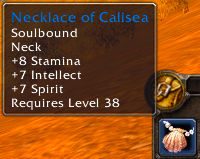
One feature of World of Warcraft that is second nature to its players, but goes mostly undiscussed outside of gaming circles, is the concept of soulbound items. A soulbound item, once picked up, cannot be transferred or sold to another player
The purpose of soulbound items is clear. You can’t trade it, so you can’t really make money out of it (other than actually selling your account itself). But it’s going to immediately and clearly show others that you earned it. Depending on what dropped the items, several different impressions will ensue. If it was an extremely challenging quest to defeat a monster, then it will show how technically competent and smart of a player you are. If it’s an extremely tedious and tiring jump quest like Maplestory’s Forest of Endurance (purely for reference, they don’t actually give you any soulbound item :P), it will indicate your grit and patience. Even if the dropped item is absolutely worthless and aesthetically ugly and has no buffs whatsoever, as long as the task to retrieve it is challenging and interesting enough, it will always create ensuing, corollary value in its wake. It can be simple as an aura of awe among players.
To summarize, soulbound items must be earned through some special in-game tasks. So once earned, they show you about who you are as a player, and in extension, tell others about who you are as a person. In other words, it becomes part of your (digital) identity.
Well then what does the current NFT space tell you? While it will certainly indicate your artistic taste and prescient views, for most people, it will be $$$. Because even if you hadn’t heard of NFTs at all for the last 4 years, you could have simply scooped up blue-chip NFTs in the market a few days ago. You just had to pay a lot. Of course, there’s nothing wrong with that. And perhaps that’s why NFTs could have gotten this big in the first place. But it does feel incomplete especially when the ethos of Ethereum is so much about empowering independent, small, grassroot individuals across the world. We shouldn’t just free the first 1 million adopters of NFT, we should free everyone.
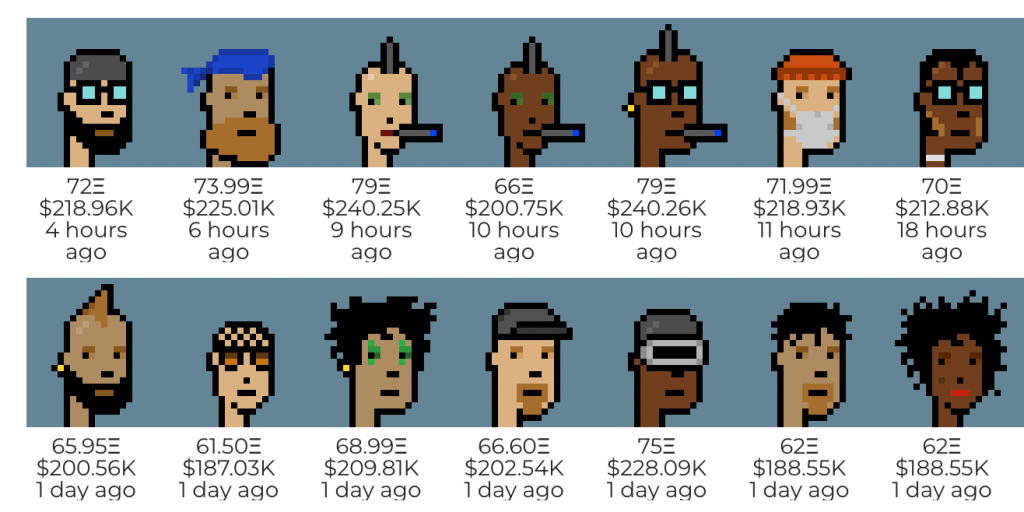
NFTs can have a bigger potential to express who you are in every dimension, including, of course, your wealth. As mentioned by Vitalik, one project that’s spearheading NFT as a token of one’s physical experience is POAP, short for Proof of Attendance Protocol.
POAP
As the name gives away, Proof of Attendance Protocol is both the protocol and tokens given when you attend–physically or digitally–a certain event. Since I don’t have any, we will make do with Vitalik’s.
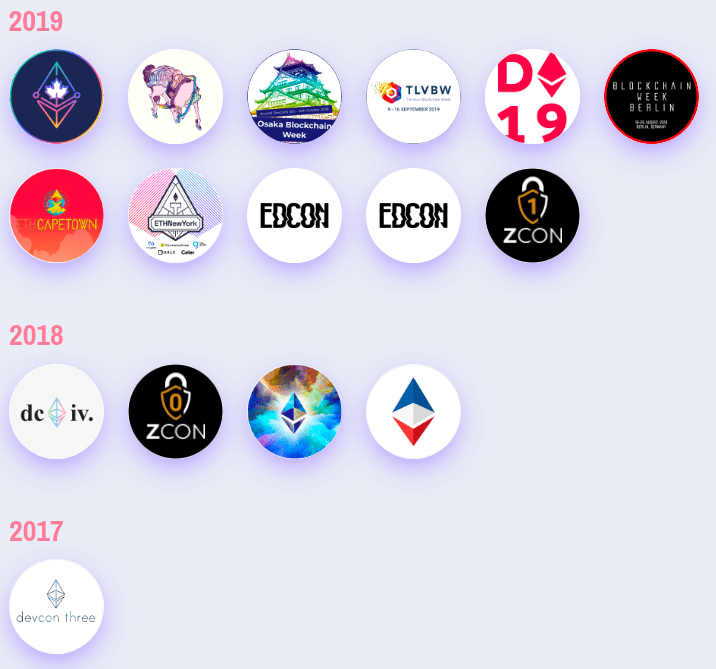
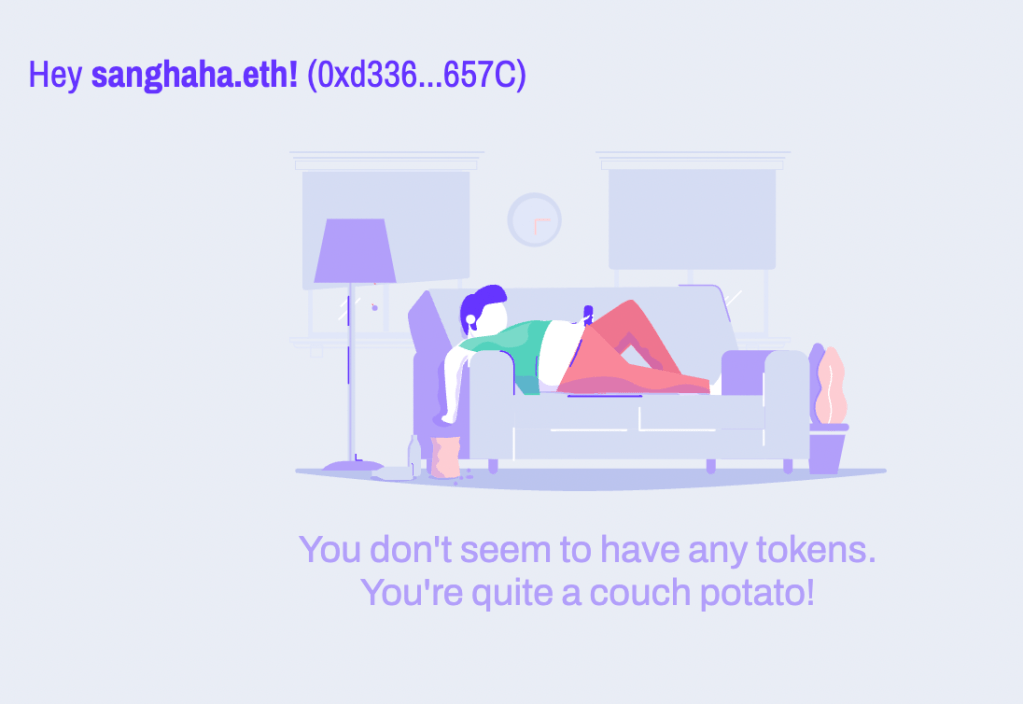
You can see that since 2017, Vitalik has attended many events (for obvious reasons), while I haven’t attended any that distributed POAPs. If we didn’t know that these POAPs were from Vitalik, then we could have confidently drawn some conclusions about the owner. This person is definitely into ETH, and not only that, he or she is probably a developer herself. And if we try to dig further on a personal level, we can assume that this person quite enjoys traveling around the world as well.
So while the concept of POAP is deceptively simple, its applications can be so much bigger and reach wider. Why? Because they tell you who this person is or at least the contour of them based on their POAPs. Look at how we just deduced that the owner may be into traveling, judging by POAPs from Cape Town, Osaka, Berlin, and New York. Just as Google finds what you want to buy or what you want by your search results and Facebook monetizes based on what you like, POAP can be another high-quality source of data about you.
But POAPs ultimately fall short because they are freely transferable to others. So you can send it to anyone and anyone can have a certain event’s POAP even if they hadn’t personally gone there. Not surprisingly, several POAPs have been changed hands [1] [2] (Note that # of transfers > # of supply). This single-handedly defeats the purpose of Adidas’ intention inscribed to the POAP.
This digital collectible is our way of rewarding you for following your curiosity as we explore this new age of originality together. This token proves you were here from the beginning of this journey. Keep it safe — it may come in handy.”
Well we can trace the lineages, but that’s already mouthful for non-tech POAP event organizers. According to Vitalik, POAP team proposes that the organizers have their own internal check to disable transfers to different owners. The biggest value proposition of POAP is that it offers the product off-the-shelf for anyone with minimal amount of blockchain knowledge. If so, baking the non-transferability as a configurable switch will make more sense.
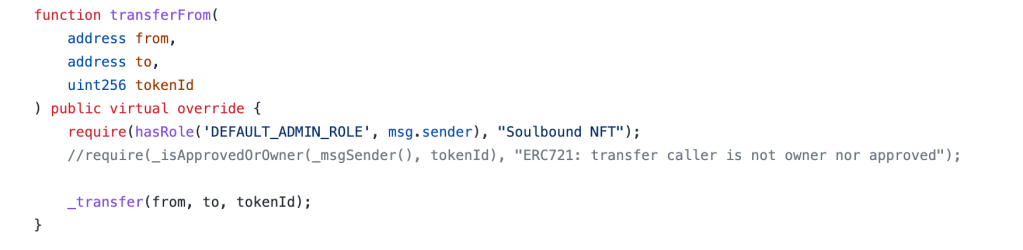
Otherwise, POAP becomes at best an in-complete implementation of Proof of Attendance and at worst just another tradable NFT.
Proof of Experience
So POAP with non-transferability is a great concept showcasing that we can turn something physical and personal to digital. What else can we do? Can we do more? Can we try to generalize it? Can we actually attempt to capture all kinds of personal experiences and attempt to recreate NFTs as our digital selves?
But, first of all, why should we? Well, first of all we know all too well that our digital selves are siloed among platforms, so siloed to a point that our digital information is not with us, but with platforms. So we need to bring them back. Secondly, we don’t have a bridge from the physical to digital when these two worlds are increasingly merging. We not only need a bridge, but also one that we can own. Thirdly, once we control our digital selves that we’ve created, then we can selectively grant selected portions of our data to service providers based on the benefits they provide. Last but not least, it’s going to be wickedly fun. Imagine Pokemon Go but where you collect travel mementos as NFTs instead of Pokemons. So if you go to Sagrada Familia, you can collect traveler’s memorabilia as an NFT. Of course, we can do this everywhere. Pyramids, Petra, Hawaii, Serengeti, you name it. They can be infinitely scalable. Other than just being fun, this creates a consistent, digital repository of one’s memories, which is essentially, a digital self. They can be celebrated digitally forever.
So what else are worthy experiences to start with? Something that the holder wants to celebrate or boast will be easy ones. So achievements like finishing a half marathon, memorable experiences like skydiving, or records like finishing top 100 in League of Legends Season 11 come to mind (Note that in the last example we are bridge siloed private data to the public realm that of course can be controlled by us).
Other than experiences, you can also turn your physical belongings into their digital representations. I reckon this will be very popular with collectors and companies who want to manage and celebrate their most royal fans. For brands, as Adidas did, soulbound NFTs can be a CRM tool that can manage fans throughout their entire lifetime. Leveraging blockchain’s data persistence, they can now easily track whoever touched their product, and they can reward their support with little doubt. Not only that they can also reference other NFTs that their fans have collected and offer customized offerings. Obviously there will be data privacy issues, but this will be progressively handled with new innovative approaches like Zero Knowledge Proofs. In other words, you can track, service, and manage your customers for a lifetime now, leveraging blockchain as a composable data layer, controlled by their customers themselves.
Alternatively collecting POAPs in itself could be a game. Imagine a Pocketmon Go version for POAPs where you can collect certain POAPs only if you visit certain places. And if you collect all of them, you can additional memento. (I’m simplifying to the maximum) Obviously you will need some clever mechanisms to counter GPS spoofing, but as seen by Pocketmon Go, people genuinely enjoy walking around. And accept it as part of its experience. And people already love travelling!
You can also turn you physical belongings into a digital one. I reckon this maybe popular with collectors and companies who want to manage and celebrate their fans. If we turn our attention to companies, as Adidas did, soulbound NFTs that represent certain experience can be a huge gamechanger in how they do CRM. Leveraging the persistent nature of the data, they can now track easily whoever touches their product, and they can handsomely reward their support / commitment. Not only that they can break out of their siloed CRM and leverage the other POAPs that their clients have collected. This way they can also spot trendsetters better as well. Obviously there will be data privacy issue, but this will be progressively handled with new innovative approaches like zkSnark and ZKPs. In other words, you can track your customers for a lifetime now, leveraging composable data layer.
We often reference KK’s 1000 true fans to see how independent creators can thrive on the Internet by going directly to their small group of die-hard fans with zero distribution cost. I believe soulbound NFTs can be a springboard as well, but for everyone; It can supercharge mega brands to serve their millions of royal fans more effectively, efficiently, and exclusively. It’s not too hard to imagine Gucci having their own Web 3 wallet to offer exclusive experiences based on NFTs that their clients have.
Paving alternate path
Contrary to my focus in tokenizing personal experiences, Vitalik focuses on governance and identity attestations as good soulbound applications. I think they are great as well (only maybe less fun). You can also say that not everything has to be on-chain as well. That’s 100% valid, and I’m sure we will figure it out by iterating. My only wish is for that journey to be fun, and turning something extremely personal to a soulbound NFT and weaving your story based on that sounds like an extremely fun start for me.
It’s a future that we are not entirely sure of, but I can imagine it being much bigger than just a financialized one. It can be a truer path to fully owning one’s digital existence, not bound by platforms. Just as we own our memories through photos, so can we own our experiences through NFTs. And we can send them to Google, Apple, Facebook, or anywhere else and take them away at our will. In that sense, we can imagine a future tech stack made by a composable data layer that’s protected by permission and technology and service providers building customized services based on shared data that they can immediately access.
NFTs may set us free.

 Sang Ha Park
Leave a comment